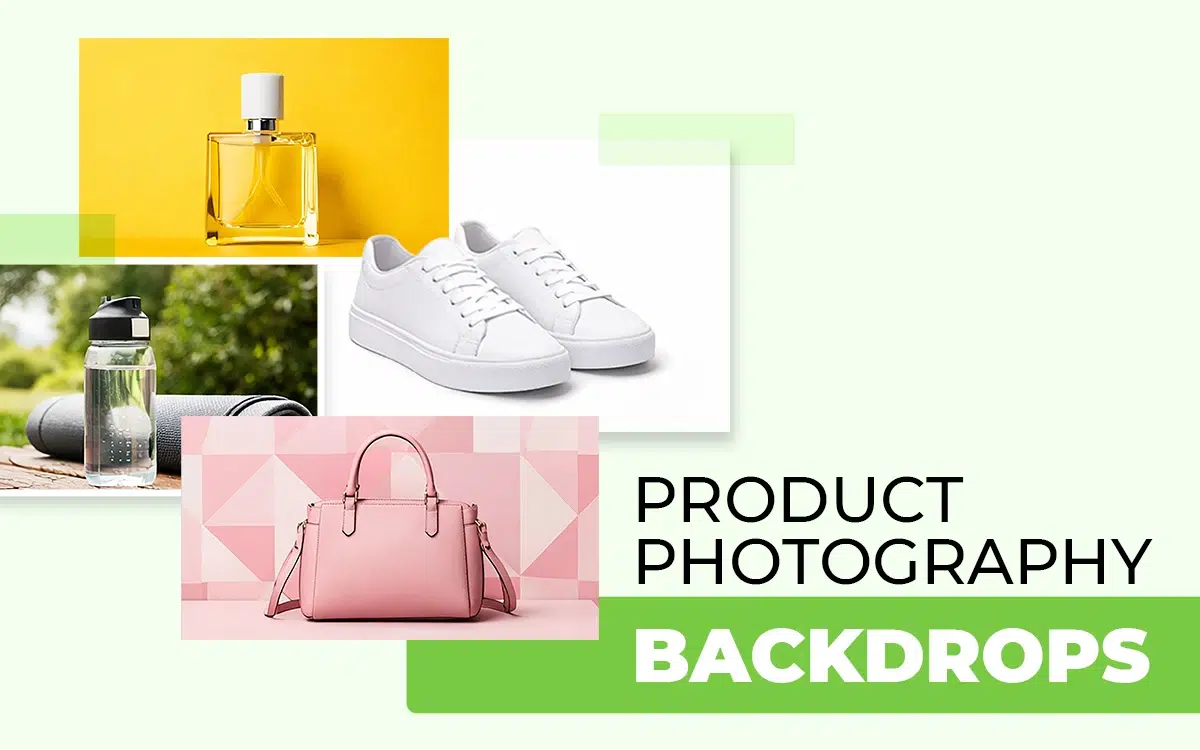
A great product photo doesn’t happen that easily. It takes a lot of editing, and of course, an appropriate product photography backdrop.
A simple, solid white or bold coloured shade background is preferable for an e-commerce product photoshoot because it keeps the focus on the product. Textured material backgrounds work especially well with products made of fabric, wood, and stone because they complement the natural look and add depth. And environmental scene backgrounds are perfect for lifestyle products as they demonstrate the product in real-world usage.
Considering your struggle to choose the right product photography backdrop, we have designed this article in a way that will give you a detailed insight into photography backdrops.
What is Product Photography Backdrop?
A product photography backdrop is important for setting the mood, uplifting the product appeal visually, and making it distraction-free from anything else. The right product photo background can enhance the mood and highlight the details, so that it becomes easier for the shopper to visualize the usage and make purchase decisions. There are various types of backdrops for photos, for instance, white or plain, colored, textured, and environmental.
Can AI-generated Backdrops Replace Traditional Product Photography Backdrops?
AI-generated backdrops cannot fully replace traditional product photograph backgrounds. Yet AI-generated backdrops are efficient, cost-effective, and can have infinite creative variation, and work well when you need basic and repetitive tasks. But manually editing a photograph backdrop gives a realistic touch, accurate shadow, authentic lighting and true texture, and high-end product details.
Even though AI-generated backdrops are best for bulk content editing, during photoshoots of any luxury products, e-commerce marketplace still prefers traditional backdrops.
What is the Difference Between Paper and Fabric Backdrops for Product Photography?
The difference between paper and fabric backdrops for product photography is that paper offers a clean, smooth, and highly controlled look ideal for e-commerce and catalog work, while fabric adds texture and depth, making it better suited for lifestyle and creative shoots.
Other differences between a paper backdrop and a fabric backdrop in product photography are as follows.
| Feature | Paper Backdrops | Fabric Backdrops |
|---|---|---|
| Appearance | Clean, smooth, and minimal | Textured, soft, and natural |
| Best For | E-commerce, catalogs, product listings | Fashion, lifestyle, creative shoots |
| Lighting Control | Easy and consistent | Slightly tricky due to texture |
| Maintenance | Disposable, stains easily | Reusable, needs ironing/steaming |
| Durability | Tears and creases easily | More durable and long-lasting |
| Portability | Lightweight but less flexible | Foldable and easy to store |
| Overall Feel | Professional and polished | Warm and artistic |
Why Backdrop is Important for Product Photography?
A Backdrop is important for product photography because it transforms the whole environment of how a product is being demonstrated. The right backdrop for product photos removes distractions, highlights key details, supports your brand’s visual style, and helps create a clear mood. A good backdrop doesn’t compete with the product in fact, it makes the product stand out and sell better.
Key functions of a product backdrop are as follows.
- A simple white backdrop for product photography holds the focus and clarity on the product and makes every detail easy to see.
- Textured and colored backgrounds for product images can shape the mood and emotion of a product, from luxury to energy to warmth.
- A consistent backdrop creates a brand identity and strengthens brand trust across your store.
- A suitable lifestyle backdrop will storytell the real usage of a product and help customers imagine owning it.
- The perfect backdrops for product photography can highlight key features, making colors, texture, and design stand out.
- Shooting with a clean background minimizes post-production edit time and cost.
Which Backdrop Colors Help Increase Product Conversion Rates?
White, black, pastel, and light neutral tones are the most popular backdrop colors that help increase product conversion rates because of keeping viewers focused. Backdrop for product photos is crucial because it influences how a product is perceived and how quickly a customer decides to buy.
- A white backdrop for product photography is the most preferable backdrop for e-commerce products because it looks clean, minimalist, and professional, and keeps full focus on the product.
- Light neutral tones backdrop for product photography such as beige, soft gray, and cream, create a premium, lifestyle-ready feel without distraction.
- A black backdrop for product photography is mostly preferable for luxury and power, making it ideal for high-end products.
- A pastel shade backdrop for product photography works well for beauty, baby, and fashion items by creating a soft, approachable mood.
What are the Best Product Photography Backdrops for Photographers?
The best product photography backdrops for photographers depend on what type of product you are photographing. There are multiple backdrop ideas for product shooting, but only the right backdrops can turn any ordinary product shots into something polished. Below are some best product photography backdrops.
1. Vinyl Backdrops
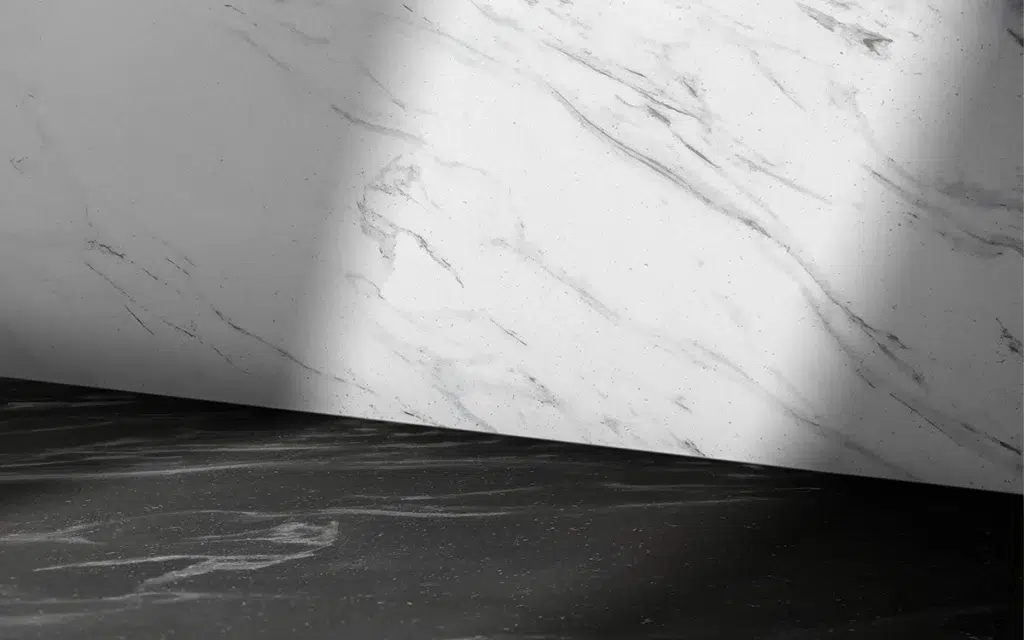
Vinyl backdrops for product photography are the most used and preferred professional product photo background setup, as they give sharp, professional product shots without a heavy setup. Vinyl backdrops are the most durable, easy to clean, and come in a huge range of realistic textures, think marble, concrete, wood, and bold solids. Vinyl stays in a flat position, giving a resistant glare, hence making it perfect for food, cosmetics, jewelry, and e-commerce items.
| Pros | Cons |
| Long-lasting | Can become stiff at a lower temperature |
| Water-resistant | Black side is reflective with visible texture |
| Can be wiped off dirt with a wet cloth | Heavy and a bit expensive |
| Crease and wrinkle resistant | Shoe prints are difficult to remove |
| Matte vinyl is glare-free | |
| Available in various sizes, colors, and patterns like faux wood, faux marble, etc |
2. Foam Board
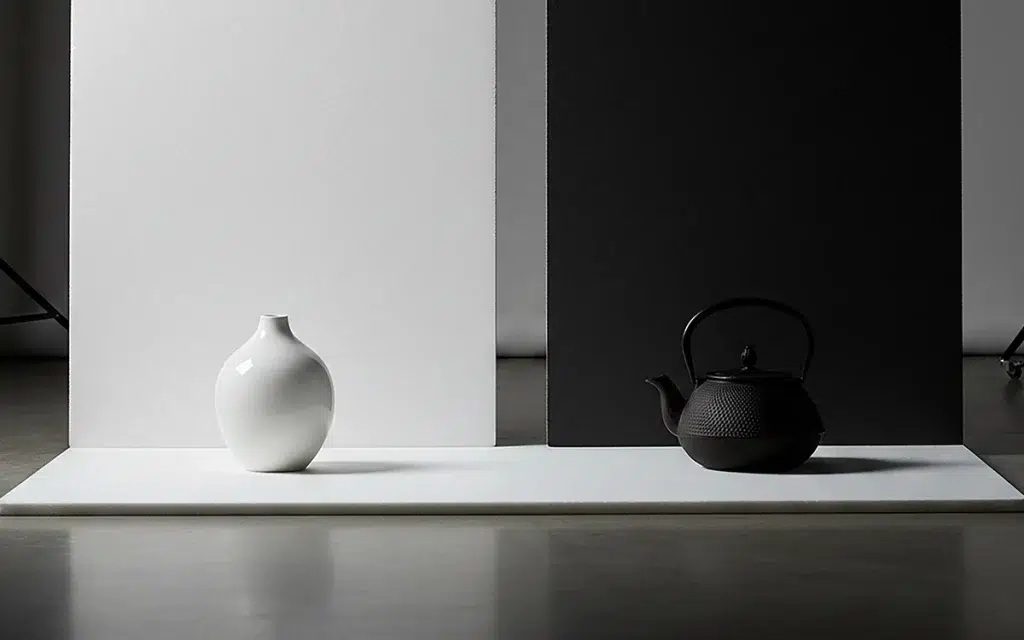
Foam Board is the all-time favourite tool of every photographer, because it’s more than a tool, a problem-solver on set. Foam Board is lightweight, inexpensive, and gives you a smooth, matte surface to keep reflections under control. White foam board is best for shooting clean products and to give a bouncing soft light to the product. While black form board helps block stray reflections and adds contrast when you want moodier tones.
| Pros | Cons |
| Lightweight | Can be damaged easily |
| Budget-friendly | Good for temporary use |
| Easily transportable | Not completely waterproof |
| White foam board can be used as a reflector | |
| Can be stuck to the walls with removable adhesive |
3. Painted Canvas Backdrops for Photography
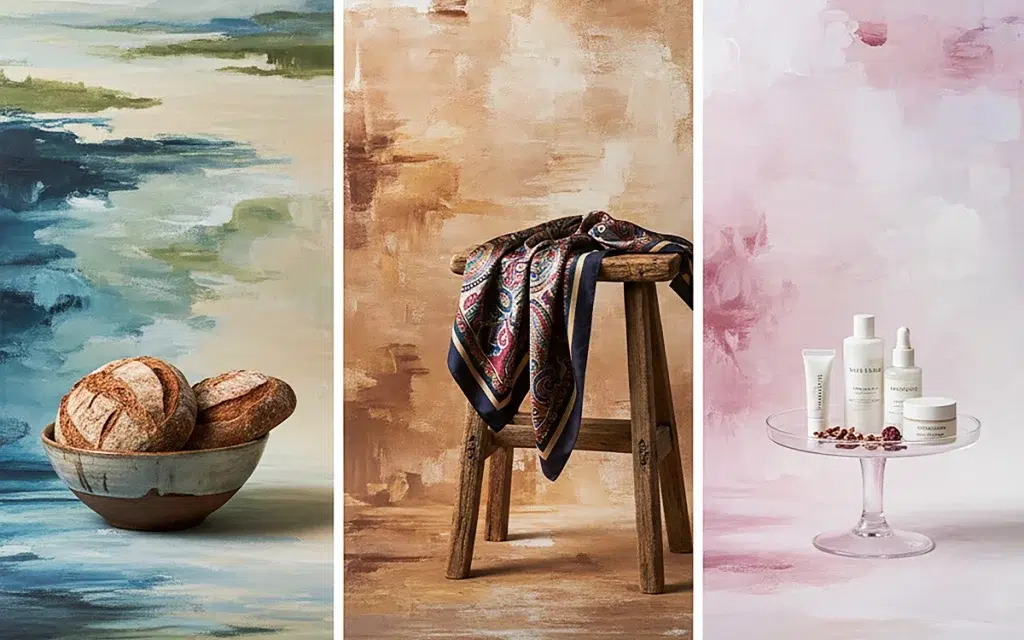
Painted canvas backdrops for photography give a level of depth and character to make everything realistic. The subtle brushwork, layered tones, and organic texture give product photos a richer, more handcrafted feel. They soften light beautifully, adding a gentle falloff that works especially well for artisanal goods, fashion items, cosmetics, and anything that benefits from a touch of artistry. Therefore, assist in creating an atmosphere without overwhelming the product, and strike a balance between sophistication and simplicity.
| Pros | Cons |
| Lightweight | Not water-resistant |
| Washable | Folds can create wrinkles easily |
| Doesn’t reflect light | Not portable due to its weight |
| Gives a seamless effect | Ideal for permanent setup |
| Vinyl on the back makes it durable | Gets dirty easily |
4. Paper Backdrops for Photography
Paper backdrops for photography are the top choice to create any flawless, uniform background, which makes every shot look sharp and professional. Paperback roll comes with a wide range of colors, from crisp whites to bold tones. The best part is that the surface is smooth, non-reflective, consistent from top to bottom, and requires less retouching.

Paper backdrops are perfect for those products that demand a polished and distraction-free look, especially for e-commerce products.
| Pros | Cons |
| Easy to use | Get creased easily |
| Non-reflective | The seamless effect makes the background smooth |
| Requires less time and hassle to edit | Not water-resistant |
| The damaged portion can be trimmed easily with a pair of scissors or a knife | |
| The damaged portion can be trimmed easily with a pair of scissors or a knife |
5. Ceramic Flooring Tile
Ceramic flooring tile backdrop goes well with the product photos, with structure and a modern, grounded feel. Since the ceramic flooring gives an endless finish, matte, glossy, textured, stone-look, and even wood-look, hence becomes easy to shift without hauling in heavy props.

It reflects light predictably, handles spills or mess from food or beauty shoots, and adds a sense of weight that works well for luxury items, skincare, home goods, and anything that benefits from an architectural vibe.
| Pros | Cons |
| Waterproof | Water makes it slippery |
| Long-lasting | Can get scratches easily |
| Fire resistant | |
| Dirt and stains can be easily wiped off | |
| Cost-effective for a smaller setting |
6. Colored or Textured Craft or Construction Paper
Color or textured craft or construction paper is mostly preferable because it is the easiest way to set and shift to any tone of a product photo without dragging any heavy material. The beauty of craft paper is how quickly it lets you test different moods, swap a sheet, adjust your light, and you’ve got a new look in seconds. Colored or Textured Craft or Construction Paper is perfect for any tabletop scenes, brand color stories, flat lays, and any shoot where a clean, controlled background makes the product shine.

| Pros | Cons |
| Glare-free | Not durable |
| Inexpensive | Not water-resistant |
| Most of them are not fire-resistant | |
| Perfect for small products |
7. The Bokeh Background Technique
The Bokeh background techniques transform the ordinary light or distant elements into a soft, glowing blur that makes your subject pop. While shooting with a wide aperture and creating plenty of distance between your subject and whatever sits behind it, you transform the background into smooth circles or streaks of light.

With the assistance of Bokeh background techniques, photographers can understand how the viewer’s sight, and how they want it.
| Pros | Cons |
| Lenses are pricy | Draws the spotlight on the product |
| Ideal for jewelry products | Imperfect in bokeh can ruin photographs |
| Makes the photograph aesthetic | Improper lighting can create a silhouette of the product |
| Draws spotlight on the product | |
| Conceals imperfections of the backdrop |
8. Cloth & Fabric Backdrops for Photography
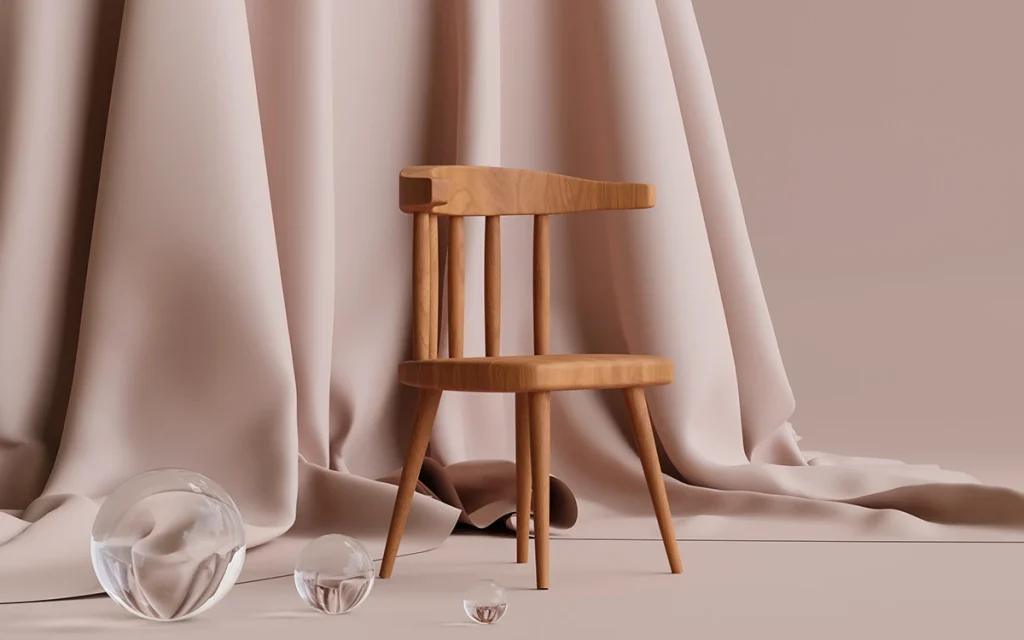
Cloth and fabric backdrops for photography bring a softness and depth that other materials can’t quite match. There are various types of cloth and fabric backdrops, such as muslin, canvas, linen, or a heavy drape, and fabric falling, which bring natural waves and also add subtle shadows and dimension to a shot. Simple, solid color fabric makes the product photograph more organic and a lived-in look. Moreover, handles light beautifully and diffuses highlights, tones down harsh reflections, and creates a mood that feels intentional without being fussy.
| Pros | Cons |
| Washable | Gets wrinkled easily and is not water-resistant |
| Long-lasting | Need steaming to remove creases |
| Easy to carry | Hand-painted backdrops are not washable |
| Non-reflective | |
| Paint holding capacity is pretty good | |
| Hand-painted backdrops are not washable |
9. Black Sand and Stone
Black sand and stone backdrop for photography can give a dramatic, grounded feel to product shots. The bold background absorbs light instead of reflecting it, hence making the subject stand out with its actual color. And the natural texture of stone adds a quiet detail, which shows the depth. Black sand and stone backdrop is perfect for any luxury goods, grooming products, jewelry, tech accessories, or anything that needs a strong, modern, high-impact setting.

| Pros | Cons |
| Easily available | Excessive stones can create visual chaos |
| Buying not required | Arranging stones is challenging |
| Gives a touch of nature | |
| Provides conceptual meaning | |
| Good for smaller products |
10. The Lastolite By Manfrotto Collapsible Backdrop
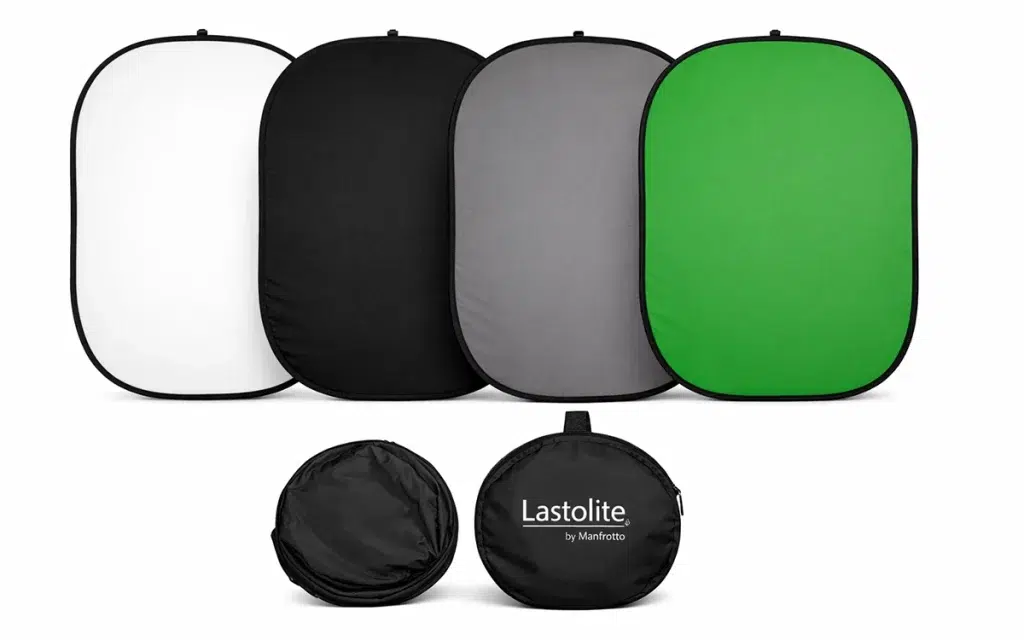
Lastolite by Manfrotto Collapsible Backdrop is a photographer’s go-to choice for the project that requires quick, reliable background control without bulky gear. The interesting part is that it is foldable and carryable into a compact disk. While photoshooting, this backdrop gives a smooth, even surface in classic colors like white, black, gray, or chroma green, hence it can shape light, block reflections, or create clean, distraction-free scenes on the fly.
| Pros | Cons |
| Washable | A bit pricey |
| Stitches are robust | Not completely opaque |
| Crease-resistant fabric | Not water-resistant |
| Rim has a lifetime guarantee | |
| Can be set up in both portrait and landscape orientation |
11. The Neewer Studio Backdrop
The Neewer studio backdrop for photography is a solid choice when a photographer wants a dependable backdrop background support without a lot of fuss. The Neewer studio backdrop is mostly preferable for those photographers who require a reliable surface for their product, portraits, and video shoots.

This Neewer studio backdrop comes in classic colors like white, black, gray, and green screen that transform the look of the scene. The material of Neewer studio backdrop is durable and designed to hang smoothly with minimal wrinkles, so photographers can get even tones in the camera.
| Pros | Cons |
| Durable | Not water-resistant |
| Washable | Stands are lightweight and less sturdy |
| Affordable price | 3 clamps are not enough for a smooth look |
| Axial locks ensure light safety | |
| Easy installation and portability |
12. The Kate Pop-Up Backdrop
The Kate Pop-Up backdrop is especially designed for those photographers who want studio-ready results without hauling around full-size gear. The amazing part of Kate Pop-up backdrop is that it opens in seconds into a sturdy, wrinkle-resistant panel and also gives an instant shooting surface, which is perfect for product work, portraits, livestreaming, or quick on-location shoots.

| Pros | Cons |
| Durable | Not wrinkle-free |
| Easy setup | Difficult to manage in windy situations |
| Both sides can be used | |
| Lightweight & easily transportable |
13. Savage Seamless Background
Savage Seamless backgrounds are available in most working studios. Having a Savage seamless gives a smooth, crease-free surface, but thick enough to lay flat, roll out easily, while holding its shape. Savage seamless brings consistency in every shot, reliable, for every clean and professional shot.

| Pros | Cons |
| Easy to use | Requires a cool place to store |
| Non-reflective | Prone to creases and scuffs |
| Cost-effective | Can’t be used without clamps |
| Professional quality | |
| Different color options |
How Do You Choose the Right Product Photography Backdrop?
Choosing the right product photography backdrop is absolutely important, and it also depends on the types of products you are shooting. A product backdrop is the only solution to enhance the real beauty of a product in a photograph and the final conversation. Below, I have shared various backdrop ideas for product shooting.
- Understand the Product
First, understand what the product photograph wants to portray (natural, clean, premium, bold, or earthy). Make sure the backdrops for product photography don’t overshadow the main product.
- Match the Backdrop with the Product Package
If the product packaging color is minimal, stick with neutral tones, soft textures, and simple surfaces. And if the package is colorful or bold, then choose a backdrop that gives a contrast or saturation; otherwise, it might weaken product and brand recognition.
- Use Color to Guide the Eye
Neutral backgrounds such as gray, beige, soft pastels, and a white backdrop for product photography are safe because this color lets the product lead. High-contrast backgrounds can work, but only when they make the product pop rather than blend in.
- Think About Texture, Not Just Color
Usually, flat backdrops feel modern and clean, but textured backdrops like wood, fabric, stone, or paper add context and warmth. Make sure that the texture is adding depth without stealing focus or creating visual noise.
- Consider Where the Photo will Live
Most e-commerce photography backdrops are white or a light color. Websites and social media allow more flexibility, but ads need fast readability.
- Control Reflections and Shadows
Glossy backdrops reflect light and can complicate shooting. But matte surfaces are easier to manage and more forgiving. Also, check how shadows fall.
How Do You Choose the Perfect Backdrop or Background Color for Product Photos?
Choosing the perfect backdrop or background color for a product photo is crucial because it can make or break the e-commerce product photograph. For e-commerce buyers, product clarity and truthfulness are the main things; therefore, backgrounds should never distort color, texture, or size perception. And the right backdrop can keep the product readable even at thumbnail size.
And most importantly, try to choose a matte backdrop, it is easier to light and avoid a textural or glossy backdrop, which reduces clarity of the product. Make sure the product looks separated from the background. If the product edges get blurred or details disappear, then you’ve to understand the backdrop is wrong.
Where Do Photographers Buy Their Backdrops?
Photographers buy their backdrops from dedicated photo-supply brands, big online marketplaces, or camera stores such as Amazon, Savage Universal, B&H store, Denny Manufacturing, Kate Backdrop, Club Backdrops, HSD Backdrops, and Photo Pie.
Each store specializes in different photography backdrop material.
Below, you’ll find the detailed description of the store, hence will be easy to choose your reliable one:
- Amazon
If any photographer wants a convenient and affordable backdrop, then Amazon or a similar type of marketplace is the option. Amazon is the best marketplace for price comparison and endless varieties. On Amazon, you can get cheap vinyl and fabric to decent mid-tier options, mostly sold by third-party brands.
- Savage Universal
Savage Universal is are go-to choice for seamless paper, muslin, and hand-painted canvas used in studios. Most photographers trust it for consistency, color accuracy, and reliability.
- B&H Photo Video
B&H is a photographer-first choice for every e-commerce store. B&H Photo Video is popular when photographers want reliable, professional materials or full backdrop kits.
- Denny Manufacturing
Denny Manufacturing specializes in custom-made vinyl backdrops for product photography, especially for schools, sports, and high-volume portrait studios.
- Kate Backdrop
Kate’s backdrops are printed fabric and vinyl, designed for portraits, kids, maternity, events, and social-media-friendly shoots rather than traditional studio work. The strength of Kate isn’t materials, it’s speed and style: frequent new designs, seasonal themes, and eye-catching patterns that photograph well and feel current.
- Club Backdrops
Club Backdrops sits firmly in the premium end of the backdrop market. They focus on hand-painted canvas backdrops with rich texture, depth, and a fine-art feel, the kind portrait and studio photographers use when they want images to look timeless rather than trendy.
- HSD Backdrops
HSD Backdrops is a studio-focused brand known for hand-painted canvas backdrops with a classic, professional look. Their designs lean neutral, textured, and timeless, made to support portraits rather than steal attention from them. These are the kind of backdrops photographers use for headshots, fine art, and long-term studio work where consistency and durability matter.
- Photo Pie
Photo Pie is a budget-friendly, design-driven backdrop brand aimed at beginners, hobbyists, and small studios. Their backdrops are typically printed fabric or vinyl, featuring trendy textures, themed scenes, and seasonal designs that photograph well without needing a full studio setup.
FAQ’s
Are vinyl backdrops better than cloth for product shoots?
Vinyl backdrops for product photography usually win when you need durability and consistency. It wipes clean, stays flat, and gives you realistic textures without wrinkling. Cloth backdrops bring softer, more organic depth, but they crease easily and can require more setup and steaming. For most product work, especially food, cosmetics, and tabletop scenes. Vinyl is the easier, more predictable option.
How do i create a clean white backdrop for product photography?
Use a white seamless paper roll or a white vinyl sheet, light it evenly, and keep the subject far enough forward to avoid shadows bleeding into the background. Add a separate light aimed at the backdrop if you need pure white. The trick is even lighting and distance, not just the material.
What backdrops are ideal for Amazon product photos?
Amazon wants clean, distraction-free images, so solid white seamless paper or a matte white vinyl backdrop works best. They photograph consistently, meet the platform’s requirements, and make the product the clear focus. For lifestyle photos, you can mix in subtle textures like wood, fabric, or neutral vinyl, but the main product image should always be on plain white.
What backdrop works best for food product photography?
Food looks great on matte surfaces that mimic natural materials, stone, concrete, wood, ceramic tile, or textured vinyl versions of those. They add character without overpowering the food. Avoid glossy surfaces that cause harsh reflections. Neutrals, charcoal, warm greys, light stone, soft wood, keep the scene grounded and appetizing.